Showing posts with label compost. Show all posts

Friday, September 16, 2016

Eat Ugly Food, Reduce Food Waste

carrot.jpg
Twitter @UglyFruitAndVeg
How do you decide which fresh foods end up in your grocery cart? If you’re like most people, you go by how they look.

The moment we walk into the grocery store, we are met with a colorful variety of produce. What’s interesting is that we shoppers expect every individual fruit or veggie to look perfect. We often think that how the produce looks will determine its quality. However, that is decidedly false. Smaller produce, slightly misshapen produce, and blemished produce are just as nutritious and taste equally as yummy, if not better, than their perfectly formed counterparts.

Why should we care that “ugly food” gets a bad rap? Consumers have power, and when we use our eyes to pick produce, we send a message to farmers and grocery stores that we only want perfect looking foods. This means that a shocking amount of ugly food--food that does not meet grocery store’s aesthetic standards--is wasted before it even gets to the grocery store.

pepper.jpg
Twitter @UglyFruitAndVeg
The EPA estimates that 31% (133 billion pounds) of food is wasted each year. This large amount of food waste sent to landfills contributes to 18% of total U.S. methane emissions. Much of wasted food is nutritious and safe to eat, but has been thrown away because it fails to meet aesthetic standards, portion sizes are too large, use by labels are misread, and for many other reasons.

Fruits and vegetables very rarely grow in the ideal shape, size, and color commonly sold in grocery stores across the country. In fact, it takes many extra resources, like water, fertilizer, and pesticides, in order to produce those magazine ready fruits and veggies.

What can we do help reduce food waste?
tomatoes.jpg
Twitter @UglyFruitAndVeg
Buy ugly food at the grocery store!
Try to find produce retailers near you that sell “ugly food”
Shop at your local farmer’s market
Make a list and only buy what you need from the store
Eat left overs first before you make a new meal

What is U-M doing to reduce food waste?
The University of Michigan composts pre and post-consumer food waste at its dining halls. This fall also welcomes a new pilot post consumer composting program at the Fields Cafe!

Friday, August 19, 2016

New Recycling, Compost, and Landfill Labels!

Hot off the press and ready for the the Fall 2016 semester, the University of Michigan welcomes the new, standardized waste bin labels!


Why are these new labels so great?

It’s a big world out there, filled with plenty of waste bins. Sometimes it becomes confusing, trying to figure out what goes in each bin. Before the University switched over to single stream recycling, there were bins of all different types: paper, newspaper, plastic, you name it!

There are even relics of these old bins still around campus.
Labels before single stream recycling.
Now, you can place any accepted recyclable into the blue recycling bins on campus, regardless of whether they say “paper only.” Those old labels make things pretty confusing!

So get ready to see more and more of the new Recycling, Compost, and Landfill labels replacing the old ones around campus. You can already find a few newly labeled bins at the Duderstadt Library on North Campus.

Easy to Use
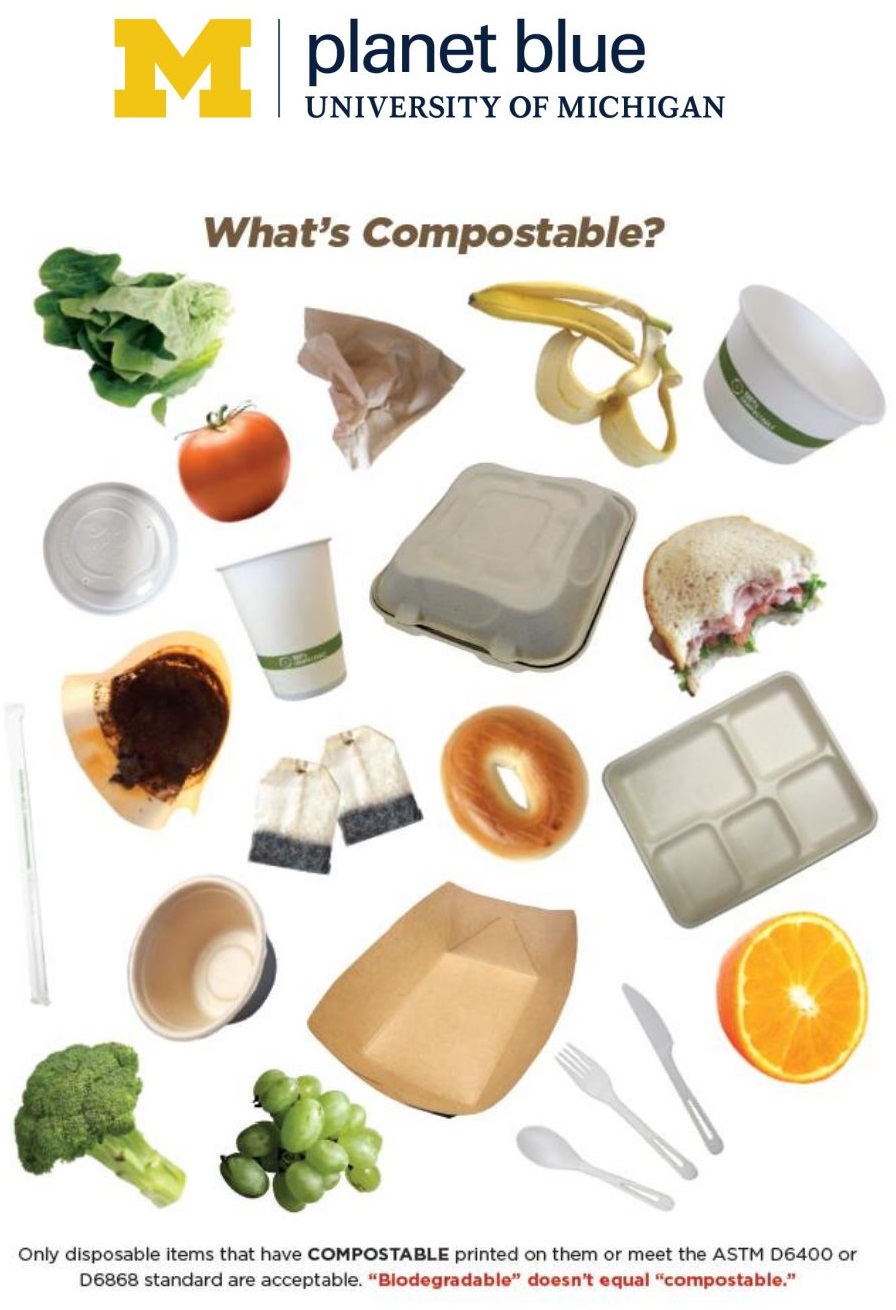
These three new labels will let you know exactly what you should place into the bin. Each label includes images and captions of acceptable materials, so say goodbye to the guess work. If the product you wish to recycle isn’t on the sign, put it in the landfill bin! Plus, all three bins will direct you to our website, www.recycle.umich.edu where you can find loads of information about which materials are accepted as recyclables or compostables at U-M.

Reality Check
The new labels will use the term landfill, which clears up any uncertainty about where products put into that bin will end up in the future. Remember, your trash doesn’t disappear the moment it reaches the bin. The University is dedicated towards reducing the amount of waste it sends to landfills (read more about U-M’s sustainability goals here). To accomplish this waste reduction goal, the entire U-M community needs to see the distinction between sending waste to the landfill rather than recycling or composting facilities.

Minimizing Contamination
The new compost signs also include a popular saying in the waste reduction and recycling world, “when in doubt, throw it out.” While some contamination is allowed in recycling, ZERO contamination is permitted when we send our compostables to the WeCare Organics compost facility. Every single item incorporated into a compost pile must be able break down into a nutrient rich product that can then be used to fertilize gardens and improve soils. Minimizing contamination is a priority when collecting compostables, so if you’re not sure, put it in the landfill bin.

They Look Good
These snazzy new labels will certainly give the waste bins around campus a new look!
So fancy.
So new.


Let's say goodbye to to some well loved, but slightly confusing labels.
BYE!

Friday, June 24, 2016

Trash in Your Trash? Reducing Contamination Among Recyclables and Compostables

Contamination is a top concern for us at the U-M Waste Reduction and Recycling Office (WRRO) and it should be one for you too. Contamination occurs when trash and other things that don’t belong are collected with recyclables and compostables. Plastic bags, glass containers, and light bulbs are just a few of the items considered recycling contaminates at U-M. Anything that’s not food waste, like a coffee cup or plastic fork, is considered a contaminate among compostables.

However, if you attend a Zero Waste Event, the cups, plates, napkins, and cutlery you throw away will all be compostable due to their special design.

Recycling Contamination
U-M sends mixed recyclables to a Materials Recovery Facility. There, the recyclables are sorted, baled, and sold.

Keeping recycling contamination rates low is required in order to:
  • Prevent unsafe working conditions for sorters
  • Maintain the quality and financial value of our recyclables
  • Prevent damage to machinery
U-M is allowed a 9% contamination rate in our recyclables. The contamination rate is not set at  0% because the recyclables will be thoroughly sorted.

What is U-M doing to reduce contamination among recyclables?
The WRRO maintains recycle.umich.edu, a website that provides all the information you need to figure out what you can and can’t recycle at U-M. The WRRO also publishes this blog in addition to posting on social media to spread the word about best recycling practices. Rufus the Recycler is also a diligent figure on campus during fall and winter semesters, educating students about recycling at U-M.

New recycling bin signs are also in development to be standardized across the University. The new signs will make it easier for you to know exactly what you should put in the recycling bin or the trash bin.

Compostables Contamination
U-M sends compostable food waste to WeCare Organics, the private operator of the City of Ann Arbor’s compost center. There, food waste eventually decomposes, becomes compost, and is sold as fertilizer or soil adamant.

Compostables are not sorted, requiring that all the material we send to WeCare Organics must decompose. This means that U-M must be more strict in its efforts to reduce contamination among compostables than it is with recyclables. After all, you wouldn’t want to find a plastic cup mixed in with the compost you purchased for your garden.

What is U-M doing to reduce food waste contamination?
While we can’t sort through food waste, we can make sure that what we originally put in the compost bin is a compostable. Pre-consumer food waste is collected by trained staff in the prep kitchens of U-M dining halls and catering locations. The East Quad dining hall also processes post-consumer food waste through a pulper, extracting water, before sending it to the Compost Center.

In addition to the standardization of recycling signs, compost signs will be updated and standardized to improve the understanding of what compostables are.

So what can YOU do to reduce contamination among recyclables and compostables?
  • Be mindful of what you put into the recycling bin or compost bin.
  • Remember, when in doubt, throw it out.
  • Take advantage of the resources provided by the WRRO and educate yourself about what is recyclable and compostable at U-M. Visit recycle.umich.edu!